Eco-Friendly Home Decor Trends in India 2026
Eco-Friendly Home Decor Trends in India 2026
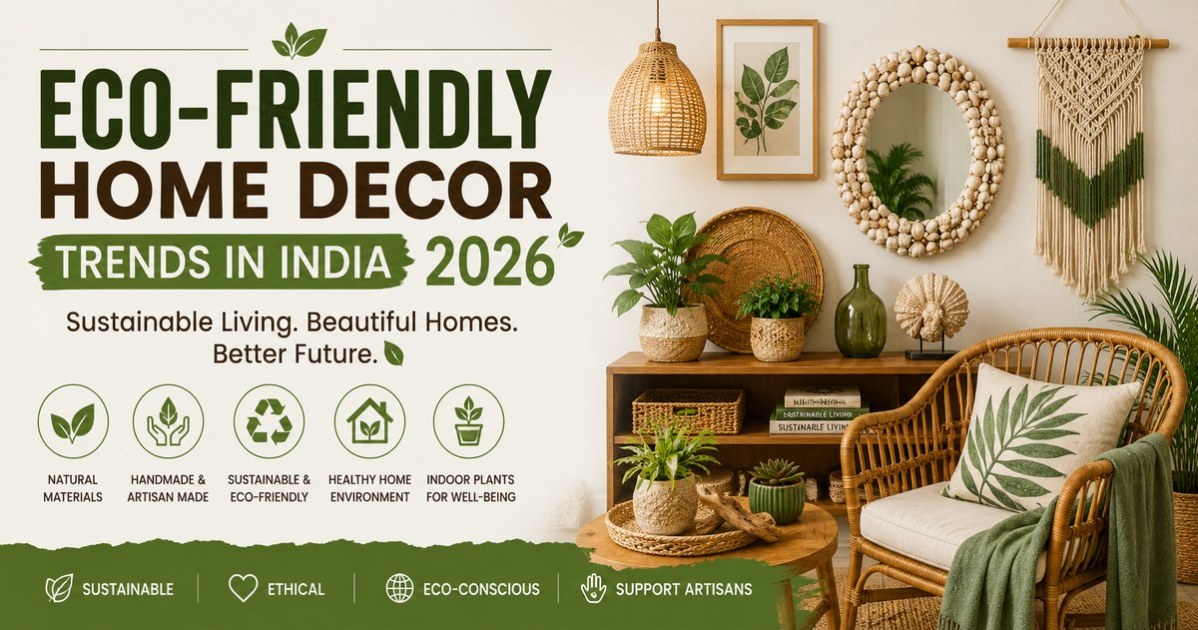
As people become more conscious about environmental sustainability, home decor choices are also evolving. In 2026, homeowners across India are increasingly choosing eco friendly home decor solutions that combine style, functionality, and environmental responsibility.
From handmade crafts and natural materials to recycled decor products and sustainable furniture, eco-friendly decorating is no longer just a trend—it has become a lifestyle. Modern Indian homes are embracing greener choices that not only beautify living spaces but also reduce environmental impact.
Let's explore the top eco-friendly home decor trends that are shaping Indian interiors in 2026.
Why Eco-Friendly Home Decor Is Growing in Popularity
Consumers today are looking beyond aesthetics. They want products that are:
- Sustainable
- Handmade
- Environmentally responsible
- Durable
- Ethically sourced
Eco-friendly home decor helps create healthier living spaces while supporting local artisans and reducing waste.
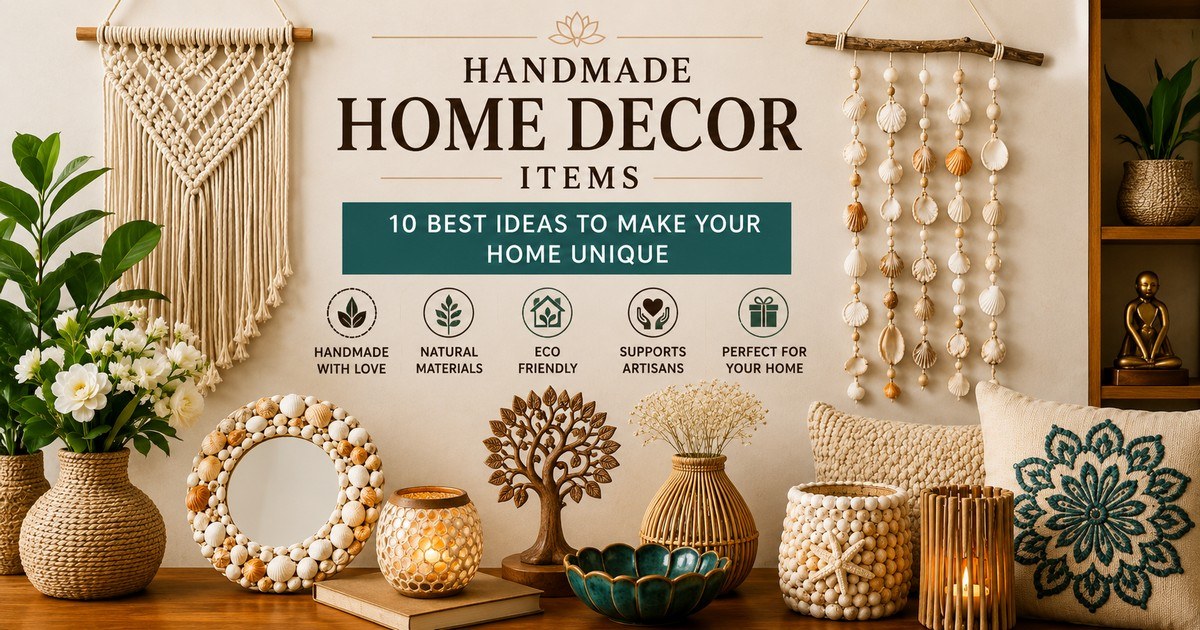
1. Handmade Home Decor Products
One of the biggest trends in 2026 is the growing demand for handmade decor items.
Popular handmade decor includes:
- Wall hangings
- Decorative mirrors
- Shell crafts
- Handmade showpieces
- Artisan-created accessories
These products bring uniqueness and authenticity into homes while supporting traditional craftsmanship.
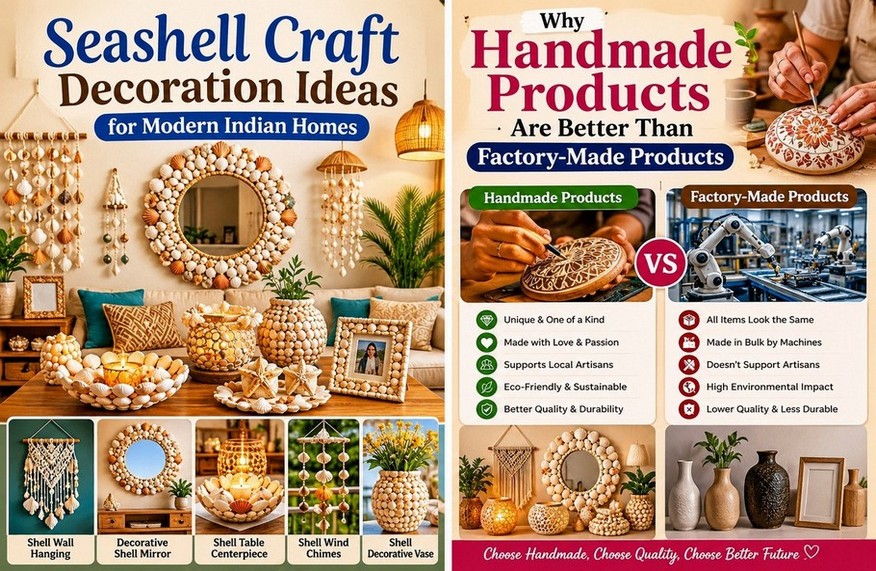
2. Natural Shell Craft Decorations
Natural shell decor has become a favorite among homeowners looking for sustainable decorating options.
Popular shell decor products include:
- Shell wall hangings
- Decorative shell mirrors
- Shell photo frames
- Shell centerpieces
These handcrafted items add coastal charm while utilizing naturally sourced materials.
3. Sustainable Wooden Decor
Wood continues to be one of the most preferred eco-friendly materials.
Trending wooden decor items:
- Handmade wall art
- Wooden sculptures
- Decorative trays
- Rustic shelves
Natural wood adds warmth and elegance to modern interiors.
4. Indoor Plants as Decor Elements
Plants have become an essential part of eco-friendly interior design.
Benefits include:
- Improved air quality
- Stress reduction
- Natural beauty
- Better indoor environment
Popular choices in India include:
- Snake Plant
- Money Plant
- Areca Palm
- Peace Lily
5. Bamboo Home Decor
Bamboo is one of the fastest-growing sustainable materials.
Popular bamboo products include:
- Decorative baskets
- Lighting fixtures
- Furniture
- Storage organizers
Its durability and eco-friendly nature make it ideal for modern homes.
6. Upcycled Decorative Products
Upcycling is becoming a major design trend.
Creative examples include:
- Decorative glass jars
- Repurposed wooden furniture
- Recycled metal art
- Handmade storage solutions
These products reduce waste while creating beautiful decor pieces.
7. Minimalist Eco-Friendly Interiors
Minimalism and sustainability go hand in hand.
Key features include:
- Less clutter
- Quality over quantity
- Natural materials
- Neutral color palettes
This approach creates clean and peaceful living spaces.
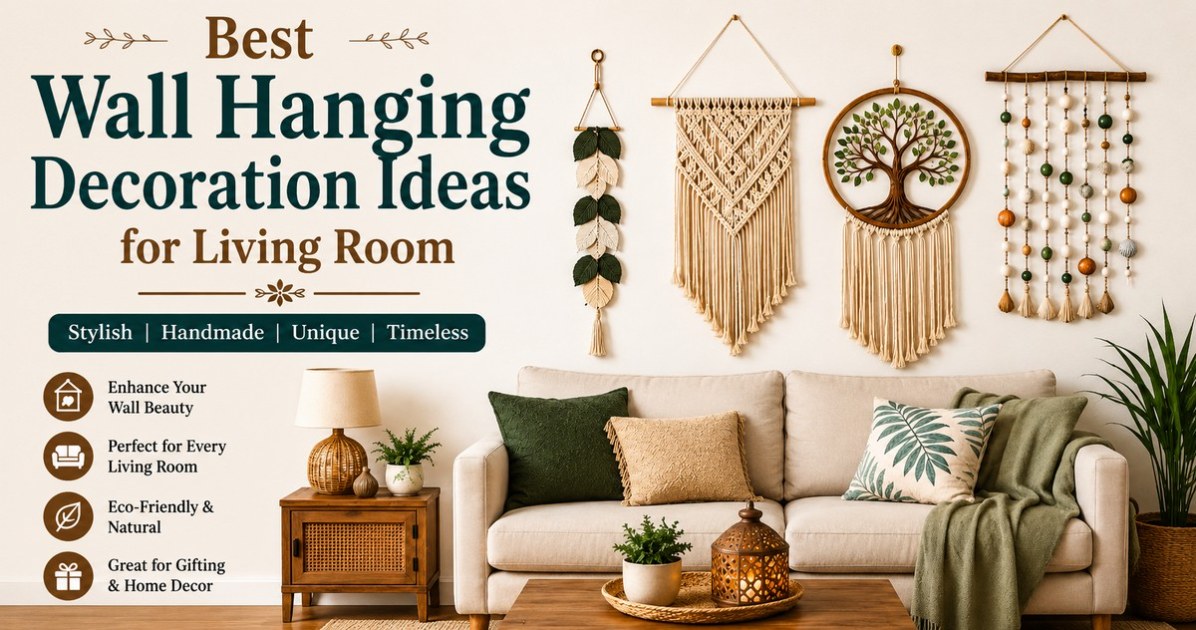
8. Handmade Wall Decor
Handmade wall decorations continue to dominate interior design trends.
Popular options include:
- Macrame wall hangings
- Shell wall art
- Wooden wall panels
- Handmade decorative frames
These pieces provide texture and character to walls.
9. Natural Textures and Earthy Colors
Indian homeowners are increasingly embracing:
- Beige
- Sand
- Olive green
- Terracotta
- Natural wood tones
These colors create calm and inviting environments.
10. Artisan-Crafted Decorative Pieces
Consumers are choosing artisan-made products over mass-produced alternatives.
Benefits include:
- Superior craftsmanship
- Unique designs
- Cultural value
- Sustainable production
Every handcrafted item adds personality and charm to a home.
How Eco-Friendly Decor Benefits Your Home
Better Indoor Environment
Natural materials often contain fewer harmful chemicals compared to synthetic alternatives.
Reduced Environmental Impact
Sustainable products help conserve natural resources.
Long-Term Value
Quality handmade decor typically lasts longer than mass-produced items.
Supports Local Communities
Purchasing handmade products directly supports Indian artisans and craftsmen.
Eco-Friendly Decorating Tips for 2026
Choose Handmade Products
Handcrafted decor reduces industrial manufacturing impact.
Buy Quality Over Quantity
Invest in durable products rather than frequently replacing low-quality items.
Incorporate Natural Materials
Choose bamboo, wood, shells, clay, and other sustainable resources.
Use Indoor Plants
Plants improve aesthetics while enhancing air quality.
Reuse and Upcycle
Transform old items into decorative pieces whenever possible.
Why Handmade and Sustainable Decor Is the Future
As environmental awareness continues to grow, consumers are becoming more mindful of their purchasing decisions. Sustainable decorating not only benefits the environment but also creates more meaningful and personalized living spaces.
The future of home decor lies in products that combine beauty, craftsmanship, and sustainability.
Conclusion
The rise of eco friendly home decor in India reflects a growing desire for sustainable and responsible living. From handmade shell crafts and wooden decor to bamboo products and indoor plants, the trends of 2026 focus on creating beautiful homes while protecting the environment.
By embracing eco-friendly decorating choices, homeowners can enjoy stylish interiors, support local artisans, and contribute to a greener future.
FAQs
What is eco friendly home decor?
Eco-friendly home decor includes products made from sustainable, natural, recycled, or environmentally responsible materials.
Why is eco-friendly decor popular in India?
Growing environmental awareness and demand for sustainable living are driving its popularity.
Are handmade products eco-friendly?
Most handmade products use natural materials and involve less industrial production, making them environmentally friendly.
What materials are commonly used in eco-friendly decor?
Wood, bamboo, shells, clay, jute, cotton, and recycled materials are commonly used.
Is eco-friendly home decor expensive?
Not necessarily. Many sustainable decor products offer long-term value and durability.